Hiển thị các bài đăng có nhãn Heavy Rain. Hiển thị tất cả bài đăng

Some Thoughts on 2010: Part Three

The past two days I have posted Part One and Two of my 2010 retrospective where I have just written a few paragraphs on the games that shaped my past year. In Part Three I finally move on to some Playstation 3 games and, shock horror, some 2D indie platformers.

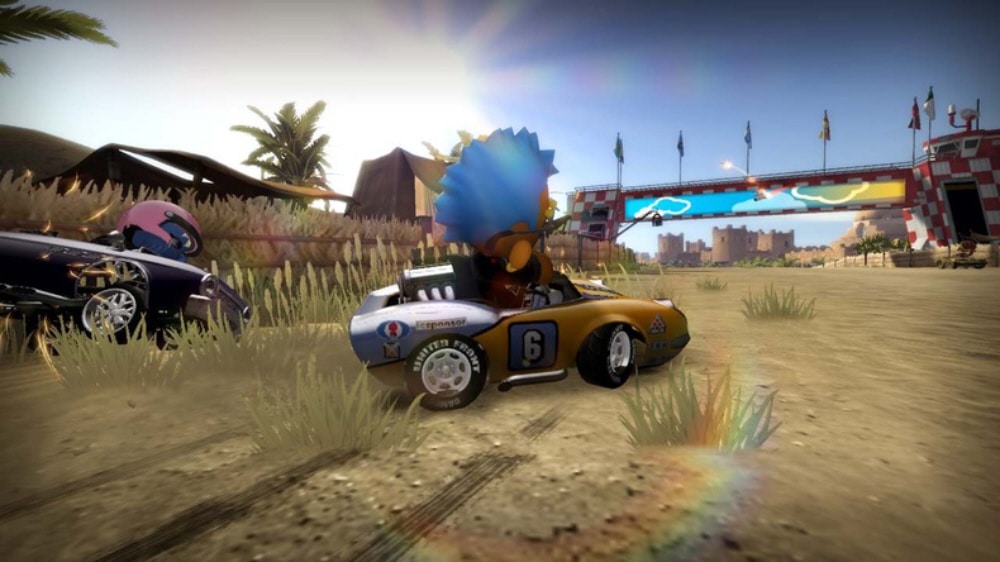
ModNation Racers


The most frustrating release of 2010. At its core is a devilishly fun kart game with interesting weapons and balanced design that can easily give Mario Kart a run for its money. Yet, around this core are layers upon layers of horrible user-interface design and slow loading times, as though the designers just didn't want anyone to play it.

A patch was released, but it fixed very little. I will probably never play this game again, which would be sad enough if the kart-racing at the game's heart was no so fun. I don't recall reading much about the game, but I did write a rather lengthy rant myself.

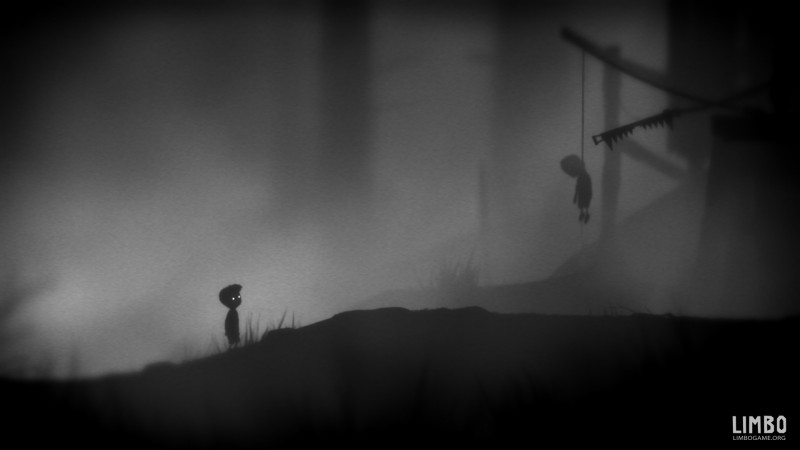
Limbo


Yet another indie platformer, yet another much-talked-about, opinion-splitting game. I would like to say Limbo transfixed me enough for me to finish it on one sitting, as it did for many others, but one puzzle towards the end had me beat for several days. In fact, I ended up having to ask my brother how to beat it. Many had issues with the game's unforgiving, exploitative design, but I solely blame myself for not being able to defeat this certain level.

Limbo nailed so much perfectly. The mood, the atmosphere, the minimal soundtrack, the puzzles. Underneath, the game could be any physics-based platformer, but the presentation made it so much more. It will be sometime before I forget the sequence with the spider and the lost boys. The transition from the game's ending back to the main menu was also superb and tied in beautifully with the game's overall themes of death and loss.

If anything, its only fault was that it played its cards too early. The woods were far more immersive and memorable than any of the later industrial stages. I understand why the stages progressed in this fashion, but they just weren't as enjoyable. Several puzzles also relied too much on twitch reflexes, that meant some players were stuck long after they knew how to progress.

People wrote many things about Limbo. Nels Anderson looked at Limbo specifically and 2D indie platformers generally and asked if they should be applauded for their unqiue thematic presentation, or criticised for their by-the-book platforming design. The debate continues for some time in the comments. Kirk Hamilton probably wrote the most interesting review of Limbo over at Paste and also tackled that one horrible-designed puzzle that nearly wrecked the game for so many players (self-included). Countless other great pieces were written both for and against Limbo all over the internet, too.

Limbo also allowed me to first dare put into words ideas I have about a concept I have been calling player privilege. They were very rough ideas, and they have changed much since those two posts (thanks largely to the many comments both posts received), but it was Limbo that first helped me to squeeze the words out.

Super Meat Boy


Yet another indie platformer! One of the things I found most fascinating about Super Meat Boy was the amount of hype surrounding it before it was even released. Hype... for an indie title! So much so that on several occasions, several months apart, I assumed it must have already been released. Team Meat did an excellent job of forming a community and getting them excited about the game in a way few indies have managed.

When it was finally released (I was resetting my 360 constantly to update the Games Marketplace) I was rewarded with the purest, most enjoyable platforming I've experience since Donkey Kong Countr II (possibly an odd comparison, but I was never much of a Mario player). This was not platforming in the same way as Limbo, which used platforming as a vessel for a puzzle game and an atmospheric experience, and not in the same way as VVVVVV which just changed around a few mechanics. Rather, Super Meat Boy took the existing mechanics of run, dash, jump, and wall-jump and polished them to a mirror's sheen until it all just felt so, so, so right.

The game is just a joy to play in every respect; it really is that simple. Some may find the difficulty too high in places, but I never felt like I was 'stuck', even when I was repeating the same level dozens of times. In a similar vein to Nels's post above, Michael Abbott wrote a good post applauding Super Meat Boy and other 2D indie platformers and claims that platformers are the gaming equivalent of jazz music. The development blog at Team Meat's website has many good reads from the development process, such as this one about risk and reward.

Heavy Rain


Ah, Heavy Rain. Despite getting so much wrong, it somehow managed to get so much right. I enjoyed the one time I played the game through, but I have no inkling to go back and try a second time to see what difference outcomes are possible. The story was drab, generic, sometimes illogical, and could have been pulled from any weeknight crime show, but the simple (some would say meager) interactivity really added something for me. I'm not certain just how often my actions actually made a difference, but it always felt like they made a difference, and that was important. It's also why I am reluctant to play it again.

This weight on my decisions and actions largely comes down to the fact the Heavy Rain is continually moving forward. If a character dies, the game continues to progress. Much like I mentioned for One Chance and Minecraft, that my actions were final made them more meaningful to me.

What I also found interesting about Heavy Rain was not just how my conscious decisions affected the narrative, but how the narrative was affected by me stuffing up. Missed quick time events were the difference between life and death for a character is some situations. I'm interested to see other games implement ways for the player to incidentally affect the outcome, not just consciously.

The game's problems can't be ignored, however. The early scene in the shopping mall that sets up the entire story is completely non-nonsensical and ridiculous and has been lampooned quite well in both flash and song form. The treatment of Madison Paige as a constant victim of sexual violence (and not much else) was also problematic. Denis Farr had an excellent post at The Border House blog about that.

A couple of other pieces worth reading are Julian Murdoch's 'review' (I would call it a review, at least), and Ian Bogost's opposition to Heavy Rain being billed as an 'interactive film'.

Assassin's Creed II


This technically isn't a 2010 game, but 2010 was the year that I played it. Many people that I follow on Twitter had been discussing how much they were enjoying Brotherhood, so I decided I should play the original sequel in order to check out the sequel's sequel. Sadly, that looks unlikely to happen anytime soon as it does not look like I will be completing Assassin's Creed II any time soon.

Curtly, I am not enjoying it. The game has some very strong systems at its core, and improves on the gameplay of the first game greatly. However, the writing is consistently terrible, the pacing is non-existent, and the story might as well not-exist. This all combines to create a complete lack of intrinsic motivation--I can do so many cool things in this game, but there is just no point to do it.

Perhaps this is largely because I cannot care for the world and its inhabitants in the same way I care for those of The Capital Wasteland, Panau, or Liberty City. The nuances that most open-world games have are missing; the world around you just doesn't react to your actions. In one mission there is a full-on war being waged on the streets of a city. Among the sword fights, an old lady was sweeping her doorstep. Around the corner, two old men sat casually on a bench. These were not standalone occurrences and completely pulled me out of the experience.

There is a lot of potential here, and perhaps a gamer less-inclined to care about story and fiction than myself could really just enjoy jumping around and fighting guards (which really is quite fun). Much like ModNation Racers, the game-breaking flaws frustrated me so much because what Assassin's Creed II gets right, it gets very right. I would have been interested to explore Ezio's growing up into an assassin, but it all happens too slowly and then too quickly. He is a master of parkour before he has any right to be, and then he is committing cold-blooded murder without a second thought moments later. I would have liked to have seen a steadier progression, perhaps some sign of shock or reluctance at his first murder. Perhaps one day the gameplay will return me to the cities of Italy, but for now the nonsensical story and horrible plotting is keeping me well away.


And so ends Part Three of Thoughts on 2010! One more part and five more games to go!

Feeling Every Punch


A lot of insightful, thought-provoking views found their way into the comments of my “Player Privilege” post. One highlighted problem with my argument was that I failed to articulate exactly what I meant by wanting games that are more ‘difficult’. Adrian made the very valid point that simply making games harder for players would not be abolishing player privilege but instead would simply reinstate the privilege of the hardcore by making games less accessible. That games should require more dexterous skill was not my intended argument so this is clearly something I need to distinguish better.
Related to this, The Shape of Games To Come highlighted an important distinction between real-world consequences and virtual consequences:
"While I too would like to see greater consequence for player actions, I think I would draw a critical difference between in-game consequence and real world consequence."
As essentially what my broader argument is saying is that games could be more meaningful by inflicting harsher consequences on the player, the distinction seems like a vital area to explore. However, the distinction I would make is that they are not distinct at all.
So I am going to start with a wildly presumptuous hypothesis and then work my way back to it. So here it goes: the player takes meaning out of a game (both positively and negatively) through the ways the game affects the player in the real world. To twist this around: the real-world consequences of the player’s virtual actions communicate meaning to the player.
This implies an overlap of what exists in the real world and what exists in the virtual world, and indeed there is a whole body of literature on this topic that I am grossly simplifying and re-appropriating here. While both worlds have exclusive elements (we sit with a controller in our hand in the real-world; the dragons we slay, the cars we steal and the aliens we shoot exist solely in the virtual world), there is this massive gray area where the two worlds smash together like a Venn Diagram. This is the space where you read Fallout 3’s The Vault Dweller’s Survival Guide on the bus home from EB Games. This is the space where a real-world friend shouts “jump!” while a virtual squadmate orders you to “press X!”.
It is within this overlap, too, that we are able to interact with the virtual world. Via our in-game avatar, we project our real-world actions (pressing X) into the virtual world. This is how we play videogames. We poke a finger through this little window into the virtual world and watch the effects of that action ripple outwards. However, this window is not one-way. Just as we can effect change in the virtual world via real actions, the consequences of those actions are able to ripple back to us in very real ways—sometimes too real.
We want our actions in-game to resonate into the real world... but not too much. (link)
The Shape Of Games To Come, in his comment, clarified between what he sees as constructive in-game consequences and destructive real-world consequences by comparing how Heavy Rain and Mirror’s Edge respond to the player’s failings:
"While I too would like to see greater consequence for player actions, I think I would draw a critical difference between in-game consequence and real world consequence. I though Heavy Rain was fantastic largely because of how it handled this; I could lose whole characters, cut off entire potential plot branches and gameplay sequences, etc. based on how I acted in a particular scene. That was great.

What is not at all great is for me to be punished outside of the game for my actions. This has two possible consequences for me, both of which are bad. The first is that the narrative of the game is broken. I died a lot playing Mirror's Edge. And at the end of the day, that reinforced something for me - that the character of Faith could not possibly have done what the game said she did with the skillset the game gave me unless she ran into an almost infinitely improbable string of good luck. The second consequence is that the game has essentially wasted some of my life. Do I have to go back and replay the past hour of gameplay because there was no checkpoint? Then I have just lost an hour of my life, and now I will have to spend another hour just to get back to where I already was. That's not meaningful consequence, that's abuse."
These are both great examples. However, I would argue that both are examples of games projecting consequences from the virtual world back into the real world. They key difference is that the consequences of actions within Heavy Rain continue to resonate in the virtual world as well as the real world. That is, the game reacts to our actions (intended or accidental) and continues along a certain route consequential to those actions. This is a virtual consequence (because it affects the characters in-game), but it is also a real-world consequence (because it affects the way we play, progress, and experience the game).
Meanwhile, the Mirror’s Edge example is a real-world consequence without any corresponding virtual consequence. In short, Faith does not die. Every action between the checkpoint and our misguided jump is erased and forgotten. The player suffers consequences in the real world (loss of time, alienation at the plausibility of the narrative) while the character suffers nothing. Faith has no memory of that fateful misstep, but the player must remember every bone-crunching detail.
My initial hypothesis was that the player takes meaning out of a game based on how the game affects them in the real world. Now I don’t want to twist The Shape Of Games To Come’s words against him so the following is my own experience of Mirror’s Edge and Heavy Rain: My experience of Mirror’s Edge was marred by the way it affected me in the real world without affecting Faith in the virtual world. Yet my experience of Heavy Rain was improved by the way the consequences to my actions affected how I played the game in both real and virtual ways.
So where does this leave us? Have I found a wedge to distinguish between privilege and accessibility? Perhaps what I mean by player privilege, then, is that many games are being designed in a way as to isolate the player in the real world. The player is able to poke through the window into the virtual world then slam it shut before the consequences ripple back to affect them in the real world—ultimately blocking the player off from any meaning those consequences may have conveyed.
An example of this would be the choice to destroy Megaton in Fallout 3. While Megaton’s destruction has very clear virtual consequences to the citizens of the Capital Wasteland (a major town destroyed, many deaths, a large area radiated), the decision hardly affects the way the player progresses in the game. Regardless of what the player decides to do, they receive a house for their troubles. Further, the quests available to the player do not change—the characters within Megaton that give out quests miraculously survive the detonation. While the game’s karma system does quantify the player’s decision with ‘good’ or ‘evil’ points, the real world consequences of the player’s virtual actions are practically nil, and any meaning the player may get out of the experience is greatly diluted. [Edit: Okay. It has been pointed out to me that there are indeed a number of quests and other elements that are shut off from the player if they destroy Megaton so this example is in fact not all that great.]
At the other extreme, however, is what Adrian highlighted in my previous post as a potential abolishment of accessibility. This would be ripping the window from the wall and allowing all the consequences of the player’s actions to flood back into the real world with no real affect on the virtual—such as Mirror’s Edge or any other game with unforgiving checkpoint systems.
So ideally, the consequences of our actions should not be exclusive to either world, but resonate across both. At the end of the day, why would we put so much into games if we did not wish to take something out of them?

Imagined Interactions


“Christ, how do I jump!?”
This is the first thought that enters my head as Final Fantasy VII’s opening cut-scene melds seamlessly into the game’s opening level. I mash buttons frantically as the two blue-clad troops attack me on the platform at the Sector One Reactor station, shooting machine guns and throwing uppercuts. Eventually, more by chance than any basic cognitive skill, I manage to press ‘O’ and choose ‘Attack’. EX-SOLDIER runs across the screen, swings his oversized sword, then runs back across to the opposite side. I have no idea if I hit the trooper or not, but some strange white numbers appear before quickly fading. No idea what those are about.
And so, with chaos and confusion, begins what would eventually evolve into a several-year obsession. This game is unlike anything I have experienced before. Enemies appear out of nowhere; I can’t jump; my character just stands there and waits for the enemies to attack him. The menus are a monumental hurdle: while Western Playstation games use ‘X’ as the universal ‘OK’ button and ‘∆’ as ‘CANCEL’, Final Fantasy VII, being Japanese, uses ‘O’ as ‘OK’ and, worst of all, ‘X’ as ‘CANCEL’. Even the physical aspects of the game are wrong. The case is HUGE. Three discs? What on Earth could the other two be for?
It is 1998 and I am twelve-years-old when I first rent it from the local Video Ezy. I choose it over the shelves of generic platform games and shooting games because I have seen a cool TV advertisement showing off all its beautiful cut-scenes. But why do I go back every week and rent it again and again for months until I finally have enough pocket money saved to buy my own copy? At this early stage, I do not think it is a labour of love (that would come later), but just pure bewilderment. I am not so naïve to think Final Fantasy VII was revolutionary in the greater scheme of things, but it was certainly revolutionary for me. I had to re-learn how to play videogames from the ground up. I spent several minutes figuring out how to use the save point (not to mention my new memory card). I died four times on the first boss because of the poorly worded “Attack while its tail is up! It counters with its laser!” (I read this as I should attack while the tail was up). Every hour I played, the game doubled in scope. I stuck with it and sunk more of my time into it than any game previously, but it just kept going… And then we left Midgar.
I cannot say where, exactly, but at some point it just clicked: Final Fantasy VII was not showing me a literal depiction of the game-world, but a representation. My party and the enemies were not really running back and forth, taking turns to hit each other—this was just a representation of the battle that was truly happening. The speed with which my ATB gauge filled represented how fast my characters were. I was not missing targets that were standing still; rather, my accuracy was being compared to the enemy’s evasion to determine my probability of hitting. It would be another twelve years before I had the words, but the game’s rules determine the game’s representative fiction.
Outside battles, too, the game–world represents an actual world that was only ever hinted at. On a meta level, the constant switches in graphic styles—from gameplay, to cut-scene, to full motion video of varying degrees of quality—portray completely different worlds. In more specific circumstances, a character will walk two steps to one side to allow other characters to have a private conversation. Never mind the enemies appearing out of nowhere and the party characters walking into nowhere. 

As a representative system, Final Fantasy VII demanded that I did not just use my controller to engage with the game, but also my mind. If I accepted the world as portrayed by Final Fantasy VII at face value, the game would have made no sense. The world-as-shown works to rules incomprehensibly different to our own world. However, by using my mind to interact with the game, I was able to imagine a ‘real’ game-world lying beneath and dependent on the layers of representation.
Of course, unknown to me at the time, this is something gamers had already been doing for decades on desktop text adventures and tabletop role-plays. But for me, growing up on platform games on the Master System II and Super Nintendo, I had never before been asked to invest more into a game than what I could see on the screen.
Final Fantasy VII was the first videogame story that I actively engaged with because I had to actively engage with it. It was up to my imagination to draw out the story and the world from the rules and mechanics. Once I learnt to do this, Final Fantasy VII stopped being this weird, quirky ungame and became a fully fledged fictional obsession. The world and the characters began to matter to me not because I made important decisions that affected them, but because I was central in crafting them. Not with a character generator like Morrowind or Dragon Age, but with my imagination. Their voices, their movements, their fighting styles—things that the game only ever hints at, I am responsible for forming.
Largely, the reason Final Fantasy VII looks like it does and requires the player’s imagination to fill in so many blanks is due to the technical limitations of the time as well as hangovers from the series’ Super Nintendo iterations. As the years go by and technology allows better visuals, videogames focus more on crafting more ‘realistic’ (or, rather, comprehensible) depictions of their worlds rather than representative ones. In just the Final Fantasy series alone, we see in later games the introduction on voice acting, of enemies walking around outside battles, of more consistent graphic styles and properly-proportioned character models.
While better technology is allowing more interactive narratives in the way the game-world is able to react to the player’s actions, I feel it is also detracting from them by leaving less room for imagined interactions. That is, we can interact more with games and their worlds with our hands, but less and less with our minds. We are able to perform more and more actions; however, these actions are largely meaningless since no room is left for personal interpretation.
The more the game tries to convince us that this is how the world is, the less likely we will be convinced. On the other hand, however, the more the game leaves ambiguous, the more our minds will instinctively fill in the blanks. Take platform games such as Braid and Limbo, for instance. Although arguably more ‘artistically-minded’ (whatever that may mean) than Final Fantasy VII, these games share the same attributes that allow me to invest in the told story. All these games can only be completed in one specific way; none have room for improvisation. Yet, because of their abstract, non-specific styles, there is plenty of space for the player to imbed their own meaning into their actions and the greater narrative.
Over at Above 49, Nels Anderson has been talking about the uncanny valley games enter when they try too hard to depict realism. This, specifically, stood out to me:
"Some might say this is splitting hairs, but what matters is as soon as you start to notice these [slight flaws in games trying to be realistic], it's not possible to stop noticing them. The incongruities can pull the player out of the experience, reminding them they're not seeing a real place, not dealing with real people or real consequences.”
In Final Fantasy VII the characters do not have mouths. This does not matter as you are able to imagine them with mouths. If the characters of a game such as Heavy Rain, for instance, walked around without mouths, that would just be creepy and weird. This is because Heavy Rain (along with most AAA titles of recent times) is telling the player what the world and the characters are like, not asking them to imagine what they may be like.
Anderson uses the example of Puzzle Agent to show a game can evoke how a place feels far more convincingly than a game can ever show how a place looks. For my twelve-year-old self, this is exactly what Final Fantasy VII did. I knew how the Midgar slums, Nibelheim, and the Golden Saucer felt and used my imagination to fill in the blanks that the game did not show me. I became more invested in the world because, in large, that world only existed in my head.
We talk a lot about giving the player agency over the narrative, thinking that the only way to do this is to increase the intricacy of choices and the quantity of paths. These are certainly methods that we should keep exploring, but how about the way readers have been interacting with narratives for centuries: with their imaginations?

In Defence of the Cut-scene


A lot can (and has) been argued against the use of cut-scenes in games [1]. They are broadly seen as an archaic film mechanic that stumbled into gaming convention in an age when games were too young and naïve to put forward any other alternative. I agree wholeheartedly that instead of relying on the storytelling mechanics of a pre-existing, passive medium, game designers should focus on exploring the unique, interactive ways videogames can present stories spatially and dynamically. However, I feel that games have held on to cut-scenes for decades now for reasons other than a lack of knowing any other way to do things. In this piece, I do not want to defend the games that depend on filmic techniques to jam a linear story into independent gameplay, but rather defend the games that harness cut-scenes as one of many expressive tools unique to our medium.

These are some arguments commonly levelled at cut-scenes:
  1. Games are fundamentally participatory and active; films are fundamentally authored and passive. Taking away the player’s agency to tell them a story directly contradicts what a game is.
  2. Rewarding the player for completing an interactive challenge with a non-interactive scene makes no sense. It isn’t a reward, it is a punishment. As Eskelinen says, “If I throw a ball at you, I don’t expect you to drop it and wait until it starts telling stories.”
  3. The world depicted in a game’s cut-scenes often contradicts the world depicted in a game’s gameplay, creating ludonarrative dissonance between the story and game. This should be avoided at all costs.
Again, I have to stress that I agree with all of these as issues in games that rely overtly on cut-scenes, and I could list plenty of games guilty of all three of these because they are too dependent on telling stories in preauthored fashions. However, I do not believe all cut-scenes should be frowned upon for these reasons. Allow me to counter the above arguments with the following justifications for when cut-scenes are viable:
  1. Cut-scenes pause player agency temporarily to allow the character to exert their own agency and to contribute to the player/character relationship.
  2. If a player’s emotive involvement in the game’s story has been sufficiently heightened during gameplay, a cut-scene can indeed be a reward by taking advantage of that emotive involvement in a way an entirely passive film never could.
  3. Ludonarrative dissonance, to an extent, does not matter. The game as played by the player does not have to be in perfect sync with the story as presented about the character.
Okay. Now that I have put that out there, allow me to clarify what I mean by each of these before I get flamed.

1. Cut-scenes allow a space for characters to exert their agency.


I am currently working on a paper about the relationship between the player and the character in adventure videogames where I argue that adventure videogames don’t exclusively rely on player agency so much as they rely upon a symbiotic agency contributed to by both player and character. Both the player and the character exert agency in unique ways and only through a cooperation between the two can the story be enacted. In Uncharted 2, for example, the player has agency over Drake’s aiming, jumping, and running; but Drake himself has agency over how skilled he is at these abilities as well as the decision to be a treasure hunter in the first place.


The cut-scene allows a space where the player steps back and lets the character have their agency. This is why, in extreme examples, some characters only ever speak in cut-scenes while remaining mute during gameplay (such as the playable character of Killzone 2). The games these characters belong to draw a clear (perhaps too clear) line between who is leading the player/character relationship and when.


Let’s look at Grand Theft Auto IV. The player has agency to decide how they navigate the city, which order they attempt missions, what crimes they partake in. But once the player begins a mission, the character takes the lead in conversation and their relationships with other, non-playable characters.


Of course, a bad game that is too reliant on cut-scenes will take this too far and will only be capable of progressing the story in cut-scenes when the gameplay is halted. A good game, though, does not draw such distinct lines but instead blends the player and character’s agency through the gameplay and the cut-scenes. This is seen in the long drives between missions in Grand Theft Auto IV (praised and slammed in equal measure across the internet and reviews for being “nothing but glorified cut-scenes”) where Nico converses with other characters, or in Drake’s constant chatter in Uncharted 2. Rather than splitting the player’s agency and the character’s agency, cut-scenes used well emphasise the player’s relationship and co-dependency with the character. We can play Niko Bellic as a sociopathic maniac in our gameplay if we desire, but it is in the cut-scenes that we learn to care about him and his relationships.


2. Cut-scenes can harness the player’s emotive investment


A cut-scene in a game, viewed by a player who has just spent two hours of active involvement with the world and characters, will be more emotively powerful than an identical scene viewed as part of two hours of passively watched film. Several cut-scenes exist throughout the Halo series that I found particularly memorable—more so that the same scenes would have in a movie. For instance, the conclusion of Halo 2 where the rings almost fire, and the activation of the forerunner artefact beneath New Mombasa in Halo 3 to name a couple. These scenes, while dramatic in their own right, would not have had nearly the same effect on me if I had not been involved in the world and its events for the preceding hours. The rings activating would not just affect the characters, it would affect me and my stake in the game’s world.


Cut-scenes, then, should not be used as a prescriptive film mechanic forced onto the game, but as a tool wholly reliant on the game’s interactive nature and the player’s consequential engagement in order to invoke the desired response. As a movie, Halo would be dumb and cliché; but as a game it is able to take advantage of my connection to the fictional world to extract illicit and specific emotional responses.


If I throw a ball at you, I don’t expect you to stop and tell me a story. But if you caught it like this, I would expect you to revel in the feat you just achieved before throwing it back to me.


3. Ludonarrative dissonance does not matter… not all the time, at least.


A dissonance between the world of the game and the world of the cut-scene can jar the player’s experience when the dissonance is an inconsistency in the fiction. Why should a grenade critically injure a character in a cut-scene when we have seen countless grenades explode futilely at their feet during gameplay? If Solid Snake is holding a silenced pistol in a cut-scene, it is fair to assume he will have one when the cut-scene is over. This dissonance that does jar is due to a contradiction of the character’s abilities during gameplay and the character’s abilities during a cut-scene, and it is certainly a bad kind of ludonarrative dissonance that should be avoided at all costs.


However, the dissonance between how the player plays the character during gameplay and how the character behaves during cut-scenes, I would argue, is not jarring. Or rather, if the player does find it jarring, it is partially the player’s own fault. If the player wishes to actively engage in a game’s story, the player has a responsibility to engage in a certain way. If you feel Grand Theft Auto IV’s story makes no sense because Nico acts like a sociopath between missions, then don’t act like a sociopath between missions! Player’s cannot expect to have an active role in a game’s story without also taking some responsibility for that story.


Though, the player may certainly play the game however they desire and ignore the story completely, in which case the dissonance between gameplay and cut-scenes is insignificant because the player is not playing for the story’s sake. The player should be able to cause ludonarrative dissonance because they should be free to play the game however they want. This is true even of games that do not have cut-scenes, such as any player of Half-life who gunned down every scientist and security guard they stumbled across during their escape from Black Mesa.


If the dissonance is internal to the character, that is bad and a sure case of a game depending on cut-scenes to tell a story. If the dissonance is caused by the player’s behaviour, it does not matter because it is the player that is choosing to cause it and at the end of the day, the player is free to do whatever they desire… as long as they take responsibility for the consequences. The cut-scenes of Grand Theft Auto IV do not jar my experience of the game, but rather hint at how I should enact my role as Niko Bellic if I wish to contribute to a meaningful story.


  *    *    *
Some of the best games I have ever played have no cut-scenes and would not be made any better with cut-scenes. But at the same time, some of my most memorable gaming moments were not interactive but were memorable solely because of the interactive context they were situated in (Bioshock and Heavy Rain being key examples, for me at least). At the end of the day, videogames are interactive and need to develop their own unique, interactive way of present stories for the player to enact independent of pre-existing linear mediums. However, just as videogames are able to use written text without prescribing to a purely novelist mode of storytelling, videogames are also able to use linearly acted cinematic cut-scenes without prescribing to a purely filmic mode of storytelling. Has any cut-scene in any Halo game been as memorable as my mad dash to the Longbow with only twelve seconds before the ring self-destructed? Certainly not! But that does not mean the cut-scenes did not contribute to my overall Halo experience.

Cut-scenes should not be used to jam a story into gameplay that does not need it, nor should the duration of a game’s cut-scenes ever outnumber the hours of actual gameplay. But as one of many tools available to the interactive story-creator, the cut-scene should not be thrown away just yet. 


Notes:

1. Most recently I read the slides for Trent Polack's talk titled "The Cut Scene Crunch" and I think they put forward a very simple, very concise argument. Strongly recommend everyone checking them out.

2. This post has since been republished on Kotaku and has received a lot of interesting comments both agreeing and disagreeing with it. 

Interactive Tropes

So I started playing Heavy Rain last week and am enjoying it quite a lot more than I expected to. Perhaps it is simply the novelty of playing a game that is more than Just Another Shooter or Just Another Platformer that I find so alluring about it; I'm not sure. It is not without its flaws, but a post addressing those can wait until I complete the game, and that will have to wait until this so called apocalyPS3 passes. For now, I want to look at something which has previously played through my head but which Heavy Rain has caused me to consider from a different perspective: the relationship, or perhaps dichotomy, of interactive-ness and round-ness.

Narrative in linear mediums are more convincing, more believable, if the protagonist is more round. By 'more round' I mean more detailed, more fleshed out. The more we know about the protagonist, the more 'real' they feel, the more likely we are to suspend our disbelief of whatever fantastical plot they find themselves in.

On the other hand, by consequence of being interactive, video game protagonists are generally flatter. That is, they enter the story with very few personal characteristics pre-authored into them. This makes sense as the more attributes pre-ordained unto a character, the less attributes the player is able to endow through interacting with the game. A protagonist of a Grand Theft Auto-like game who has a deep-seeded belief in non-violence would render the crime-ridden story of murder and action illogical and impossible to believe, let alone be an immersive experience.

Interactivity and round-ness are opposite ends of a sliding scale. The more a player is able to interact with and have control over a character, the less round that character is capable of being. Conversely, the player will have more issues interacting with and directing a more rounded, more characterised character.

At the more round/less interactive end of the spectrum are strongly grounded characters like Cloud Strife and Nathan Drake. Characters who are round enough to be convincing in their own right, yet are only interactive in very basic ways (though completely different ways if we were to compare Cloud and Drake) that don't allow much room for the player to add their own attributes to the character. Both Cloud Strife and Nathan Drake are the same characters for nearly every player that plays through their stories.

At the other end of the spectrum, where characters are less round/more interactive, are characters like Gordon Freeman or the Vault Dweller. Characters whose nigh every move can be controlled from picking up a bottle, pulling a trigger, to climbing onto a rooftop, yet are not able to be convincing characters independent of the player's input. Instead, their personalities and moralities are expressed in the player's decision in how an obstruction is confronted, how an objective is obtained.

Somewhere in the middle, in my opinion, would be Commander Shepard and Nico Belic: characters with a relatively strong sense of self but not one that is unmovable by the decisions the player makes throughout the story.

This is why the vast majority of gaming protagonists are tropes, ranging from generic male space marines to generic male mercenaries: to allow the player to paint their own experiences and choices onto an avatar. That, and because many video games are horrible cliche, but that is a different discussion.

Heavy Rain's plot is relatively unique to video games, but is nothing that hasn't been seen before in film or literature. However, its somewhat archetypal (perhaps even stereotypical at times) crime/thriller plotline has me no less immersed than the leaking halls of Rapture or the oppressed streets of City 17. Is it simply that the interactivity of being able to bump the right analog stick to the left to avoid a head-on collision on a freeway makes the scene that much more gripping than watching it passively in a movie?

Well, simply: yes. As Ethan speeds down that freeway, he could die if my reflexes are off by a millisecond. Just as his Shaun's life is in Ethan's hands as he plays the Origami Killer's games, Ethan's life is in my hands as I play Heavy Rain. If I screw up, he is dead.

And that is an experience unique for me in Heavy Rain. I don't die; Ethan does. In Fallout 3, Half-life2, even Grand Theft Auto 4, it's not Qwae, Gordon Freeman, or Nico Belic that dies (at least, not exclusively) but I who dies. Typically, the symbiotic agency between player and protagonist within the gameworld (a symbiosis that strengthens at the less round/more interactive end of the scale) means that the failings of one of us kills us both. But in Heavy Rain, my failings may kill someone else. How far am I willing to go to save someone I love, indeed.

Heavy Rain's characters are about as far across on the less interactive/more round end of thesliding scale as it is possible to go and still be considered interactive. You cannot jump onto the bed; you cannot break and do a u-turn as you drive down the street; you cannot pistol-whip your partner in the police for being a complete douche (which he really, really is). Ethan can sit on the bed, or he can not; Ethan drives down the street whether you adjust the review mirror to look at Shaun on the backseat or not; Norman can futilely shout at the cop to stop beating a suspect, or he can not. Quantic Dream seems to be aware of this in the way Heavy Rain never seems to be referred to as a 'game' and instead as an 'interactive drama'.

By allowing the player less agency over the characters, the characters of Heavy Rain are able to be far better rounded, meaning they are able to be far more convincing characters in their own right before the player makes any form of input.

The environment, though, is another matter entirely. While the characters are less interactive and better rounded than in a typical game, the environment is arguably far flatter and interactive. As many reviews have observed, Ethan's house looks as lifeless and stale as the pages of an Ikea catalogue. The grocery store looks like every grocery store in every city in every country I have visited. The shopping mall looks like... well... okay, shopping malls are pretty lifeless already.

Note that this generic-ness of environment isn't a bad thing. The same scale of round-ness/interactive-ness that applies to characters also applies to environment. While all of Heavy Rain's environments are generic tropes, they are still believable and convincing by being so interactive. Ethan's house feels real; the grocery store feels real; the shopping mall feels as close to real as any shopping mall could hope to feel because the player is able to interact with them so coherently.

Dozens of objects in your house, in the grocer, in the police headquarters can be interacted with and manipulated to potentially affect the direction the narrative takes. It is the player's physical interactions with the environment that are more likely to affect the narrative outcome of Heavy Rai-n-either intentionally by opting to hide the origami shoebox under the motel bed, or accidentally by missing a QTE on the freeway--than the character-motivated conversation interactions like in, say, any BioWare or Bethesda title.

If Gordon Freeman, the Vault Dweller, and The Master Chief are blank canvases on which the player is meant to paint their own choices, the characters of Heavy Rain are portraits as detailed as the close ups of its loading screens--the player just adds chance scars (both physical and mental) haphazardly as they stumble through the story. However, if City 17, The Capital Wasteland, and the Halo Rings are portraits of complex, well rounded worlds within which the game occurs, then the settings of Heavy Rain are blank, minimalist walls and the player can paint on them with whatever damn item they find in the room.

There. Unmix those metaphors!