Dissidia Final Fantasy: Warriors Voyage


"There is no ending in voyage of fantasy."
— Tagline


Dissidia Final Fantasy: Warriors Voyage is a free-will multiplayer Open Role Playing Game (ORPG) which I develop. Because of my dear to Final Fantasy series, I'd love to create some memorable pleaces from Final Fantasy series for a little nostalgia with the old FF times. (Party ATB feature outcluded)
Each heroes excusively have their own voice clip from Dissidia Final Fantasy itself to make them more alive in game.

Playable Characters
Heroes Side: Warriors of Cosmos

Firion, The Weapons Specialist
"A virtuous youth who seeks to end conflict. He uses the nostalgic phrase "Wild Rose" as a source of motivation."
— Description

Firion Complete Information: Click Me!


Cecil Harvey, The Split Soul
"A kind-hearted knight wielding both the powers of light and darkness, he prizes the bonds with his allies that at times are the cause of his doubts."
— Description

Cecil Complete Information: Click Me!


Terra Branford, The Esperkin
"A pure, innocent girl born with the power of magic."
— Description

Terra Complete Information: Click Me!


Cloud Strife, The Buster Basher
"An acerbic young swordsman with glowing eyes who wields a blade as large as he is."
— Description

Cloud Complete Information: Click Me!


Squall Leonhart, The Relentless Revolver
"A cold, taciturn youth who wields a gunblade, a weapon part sword, part gun."
— Description

Squall Complete Information: Click Me!


Zidane Tribal, The Aerial Ace
"A thief with great energy and a sharp wit, though all is lost when it comes to women."
— Description

Zidane Complete Information: Click Me!


Tidus, The Spry Striker
"A light-hearted, cheerful youth able to calm others even through the most trying situations."
— Description

Tidus Complete Information: Click Me!


Villains Side: Warriors of Chaos

Garland, The Nemesis
"A stalwart consigned to the endless cycle of battle, he enjoys dueling with stronger foes."
— Description

Garland Complete Information: Click Me!


Emperor Mateus, The Trap Master
"A callous monarch who views all as mere pawns in his attempts to rule over the world."
— Description

Emperor Mateus Complete Information: Click Me!


Cloud of Darkness, The Bane of Life
"An existence that wishes for all to return to nothingness. She has transcended the abstract and is the embodiment of fear."
— Description

Cloud of Darkness Complete Information: Click Me!


Exdeath, The Entropic Adversary
"A magus of supreme darkness, born from a great evil sealed into a tree."
— Description

Exdeath Complete Information: Click Me!


Sephiroth, The Focused Blade
"A legendary member of SOLDIER once revered as a hero."
— Description

Sephiroth Complete Information: Click Me!


Ultimecia, The Sorcerous Fusileer
"A powerful sorceress possessing a deep-seated rage and the ability to control space and time."
— Description

Ultimecia Complete Information: Click Me!


Kuja, The Graceful Glider
"A sadistic, narcissistic silver-haired man of a delicate, epicene beauty."
— Description

Kuja Complete Information: Click Me!


Jecht, The Brutal Blitzer
"A former blitzball star, and Tidus's father. His surly and rough-spoken nature belie a much gentler heart."
— Description

Jecht Complete Information: Click Me!


Gabranth, The Executioner
"A warrior who swears his life to those he trusts."
— Description

Gabranth Complete Information: Click Me!


Area Info
In the beginning of game after player pick selection, player can choose 1 of 3 starting area. There is currently 2 huge island with 5 diffrent region (around middle area is still empty, I planned to make it for Mysidia (FF II), Rabanastre (FF XII), or a Dark Hole area that suck up whatever it comes near that (Auto-Dead whenever player enter that region)
As it's said above, this map is featuring a different pleaces from Final Fantasy series that an FF fan definitely know.
Final Dungeon is usually a big and long dungeon that kinda labyrinth; like in original FF I, II and III with 2 times powerful enemies and a powerful version of Villain Heroes as a BOSS inside of it.

Enemies Difficulty
I have my own formula development for every creeps depends of it's type. Creeps here are not weak either not imbalancely strong. They do also cast spells and have passive ability. Use potion whenever battle them!
- Normal Enemy: Normal. Their signature color is yellow. (Can be found everywhere on World Map.)
- Dungeon Enemy: 2 Times Stronger than Normal Creeps. Their signature color is orange. (Can be found only on Dungeon/Final Dungeon)
- Mini-BOSS: 3 Times Stronger than Normal Creeps. Their signature color is light red. (Can be found in Dungeon area. In Final Dungeon, they usually placed 1 in each floor/area.)
- BOSS: 4 Times Stronger than Normal Creeps. Their signature color is red. (Only can be found at last area of Final Dungeon. Yes, the stronger version of Villain heroes!)

In-Game Preview Screenshot


The Next Production
There is Role Playing Game (RPG) version called Dissidia Final Fantasy: Warriors Voyage 2. In Warriors Voyage 2, you have to follow the storyline in order to complete the game. There is 5 new character for Warriors Voyage 2, however, only Warriors of Cosmos is playable on this version because Warriors of Chaos themselves will be the main villains which you can found along your journey.

Project Related Post
- New Playable Characters Mini-Banners
- 16 New Wallpapers for Playable Heroes

Thieves, Poachers, Pokemon, and Me.

(Anyone got a reference for this picture?)
[A note: I imagine that many of the events I talk about in this post from HeartGold also occurred in Gold and Silver. Though, as I have not played the original Generation II games, this is the first time I have encountered them.]

After battling through half a dozen trainers just south of Violet City, I’m relieved to see the Pokecentre at the entrance to Dark Cave. It seems like a fairly odd, out-of-the-way place for a Pokecentre, but I’m not complaining; I’m only a few hours into my adventure on HeartGold, and my pokemon can hardly survive three consecutive battles in a row without fainting. It would be nice to give my pokemon a rest before venturing on.

A slightly overweight man is standing around outside by himself. I have a quick word to him as I pass.
“Pssst! Wanna buy a Slowpoke tail?”

A Slowpoke… tail? As in, the tail of a Slowpoke? As in, you removed a limb from a pokemon, and now you are trying to sell it to me?

Half-confused, half-shocked, I speak to the man again to make sure I heard correctly. Sure enough, I had. Adding to the absurdity of this interaction, when I tell him that I indeed do not want any Slowpoke tail, he tells me to ‘scram’—a jarringly rude remark in a world as polite and cheerful as that of pokemon. I enter the Pokecentre, still unsure as to what just happened.

Pokemon games, more than the average videogame, have always had to fend off baseless accusations from those trying to protect the defenceless minds of gullible, influential children. Pokemon promotes violence; Pokemon promotes gambling; Pokemon is nothing but an empty marketing scheme that exists solely to separate children from their pocket money. Most of these accusations are hyperbolic or rely on an annecdotal case study of a single child. They also completely disregard the many benefits of Pokemon, such as motivating kids to learn how to read from a young age, basic maths and logic, problem solving skills, and the general themes of cooperation and sharing that permeates the series.
In generally, the population of Pokemon’s worlds reflect all the good things we want children to think about the real-world: people are polite, selfless, and generous; animals are cute, friendly and obedient; everybody lives comfortably and within their means; and, uh, Dad is never home. So being told to ‘scram’ by someone who offered to sell me the limb of a pokemon was nothing short of shocking.

Which leads me to the one accusation often levelled at Pokemon games that seems to have a bit more friction: Pokemon promotes animal cruelty. While still exaggerated beyond all fairness, it is hard to ignore that the supposedly symbiotic relationship between mankind and pokemon seems to be defined as “man forcibly removes pokemon from natural habitat; man imprisons pokemon; man forces pokemon to battle other pokemon and to complete tasks solely for man’s benefit.”

It’s a problem at the core of the series’ design and fiction, yet one the series has gotten away with ignoring for nearly two decades by concealing it in layers of positive themes, cute creatures, and content people. Everybody—man and pokemon alike—is happy, so what’s the problem?

Which made my encounter with the shady man outside the Pokecentre so much more jarring. In a world where international terrorism seems to be equivalent to real-world juvenile delinquency, being offered illegally poached goods and then told to scram was not something I was ever expecting to happen.

More than any previous Pokemon titles I have played, then, HeartGold seems willing to accept that the relationship between man and pokemon is not one of perfectly balanced symbiosis. While man and pokemon are indeed able to live happier lives through cooperation, man is also able to live a far easier and profitable life through taking advantage of pokemon.

(By http://goodcitizen.deviantart.com)

Previous titles have ignored this imbalance or, at the very least, it has been held back by the typically well-natured people that populate the games. But HeartGold tackles it from the very beginning. In the opening sequence where you choose your first pokemon, the typical trope is that you choose pokemon X, and your friend chooses pokemon Y (where X is weak against Y). HeartGold usurps this with a slightly different formula: “You choose X, your friend has already chosen Z, and someone else steals Y.”

Steals! A young pokemon is stolen and forced to battle by an evil-hearted trainer! Professor Elm tells the player directly his concerns for the wellbeing of that pokemon: if the owner is evil, the pokemon will more likely than not grow up to become evil-hearted themselves. What a horrible fate for a living creature, to be raised in such a way that your fundamental outlook on the world is one of evil and corruption.
 
That someone could steal a pokemon and force it to act a certain way hints, from very early in the game, that the relationship between man and pokemon is not as simple and balanced as previous games would like to think. Rather, mankind has a significant responsibility to the relationship and is just as capable of taking advantage of the creatures as they are of cooperating with them.

Things quieten down for a time and my initial shock at the idea of a pokemon being stolen fades. But then I encountered the rude, obese Slowpoke tail smuggler. The plot thickens in the next town where it becomes apparent that Team Rocket had been rounding up Slowpokes and chopping off their tails to sell on the black market. The tails grow back over time, but how horrid!

And that is as far as my journey into HeartGold has currently progressed. I have a long way to go, but just from these opening hours, I sense a maturity to the series I have not previously encountered (though, I again acknowledge that I have not played the original Gold and Silver versions and the same themes were probably approached in those games, I imagine). In these encounters with the darker members of humanity there is a a heightened self-awareness that challenges not only the player to think in more complicated terms about their relationship to their pokemon, but challenges the series itself to re-evaluate the mechanics at its very core—not so much in the sense that the mechanics are morally questionable, but that they are just more morally complicated than previously assumed.

While the thief steals a pokemon to use for evil, you, on the other hand, now have the option to keep one of your pokemon outside of their pokeball. It isn’t much, but it is a step in the opposite direction to show how man and pokemon can be true companions, rather than the latter being the tool of the former.

My relationship with my pokemon has always been “I tell my pokemon to do something, and they do it; everyone is happy.” However, The pokemon thief, the smuggler, and the poaching of slowpokes by Team Rocket show that this relationship is too simplistic. I must consciously treat my pokemon well or consciously take advantage of them. There is no unconscious middle ground. It is something previous titles have tried to urge in the cutesy, throwaway dialogue, but I’ve never had the imperative to take it seriously. Why put an effort into treating my pokemon well when the alternative is, well, when there is no alternative? But this time, in a iteration of the Pokemon universe where humans exist that intentionally abuse pokemon, my pokemon and their quality of life are completely, utterly my responsibility.

Crossing King Carrion at Kill Screen Magazine

How awesome is this art?!
I have a new article up over at Kill Screen's excellent new website. It discusses ideas of progression and difficulty and being 'stuck' in Super Meat Boy and how it helps the player to deal with this in the player's chase for perfection. Or something like that. Thanks to some great editors, I'm really happy with how this has turned out so please head over there and have a read.

Some Thoughts on 2010: Part Four

And with five more games, so ends my 2010 retrospective. You can check out the games I have already talked about in part one here, part two here, and part three here.

Dragon Quest IX


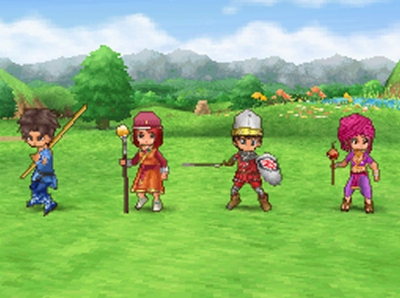
This was my first ever Dragon Quest title, and I had high hopes. I've heard much about the series generally and even more about this game specifically. Certainly, it is the first JRPG I have really enjoyed since Final Fantasy IX, and is also exactly the kind of title I have wanted for my DS for years--namely, a game that is as enjoyable to play for five minutes as it is for fifty.

While the Final Fantasy series seems intent on distancing itself from its roots as much as possible (I have no interest in Final Fantasy XIII whatsoever), Dragon Quest IX is a delightful re-imagining of SNES-era JRPGs with modern sensibilities. The dialogue is alarmingly well-written and full of self-aware humour and bad (i.e. awesome) puns. It takes itself serious enough and constantly throws interesting dilemmas at the player while also constantly lampooning JRPG tropes and cliches.

The story is passable but forgettable, and exists only to prop up the question, yet it does so aptly. Battles are quick and enjoyable and, thankfully, allows you to quickly change between AI settings or switch to full manual control. I hate turn-based games that don't let me control all my people. Dragon Quest IX's AI settings are usually okay, but it is good to be able to switch them off mid boss battle when need be.

Character customisation adds a lot, too. Being able to see every single piece of armour and weaponry on each of your characters adds just enough motivation to buy that new bandanna. I surprised myself by actually considering less-strong shoes for one character just because they matched the rest of her outfit.

I've only just recently tried out the much talked about multiplayer. It is enjoyable enough, though being in another player's world just feels... fruitless. However, pretending you are an AI companion for that player is kind of fun.

I only recall reading one Dragon Quest IX related article this year, and that was a spotlighted blog at Destructoid about how the game deals with the theme of faith.

WarioWare D.I.Y